SDE vs. EBITDA: what is the difference?
SDE (seller's discretionary earnings) is EBITDA plus one working owner's full pay and perks, plus personal and one-time costs run through the business. Normalized EBITDA instead deducts a market-rate manager salary, so SDE is the higher number. Brokers price small owner-run firms on SDE and larger firms on EBITDA.
SDE vs. EBITDA at a glance
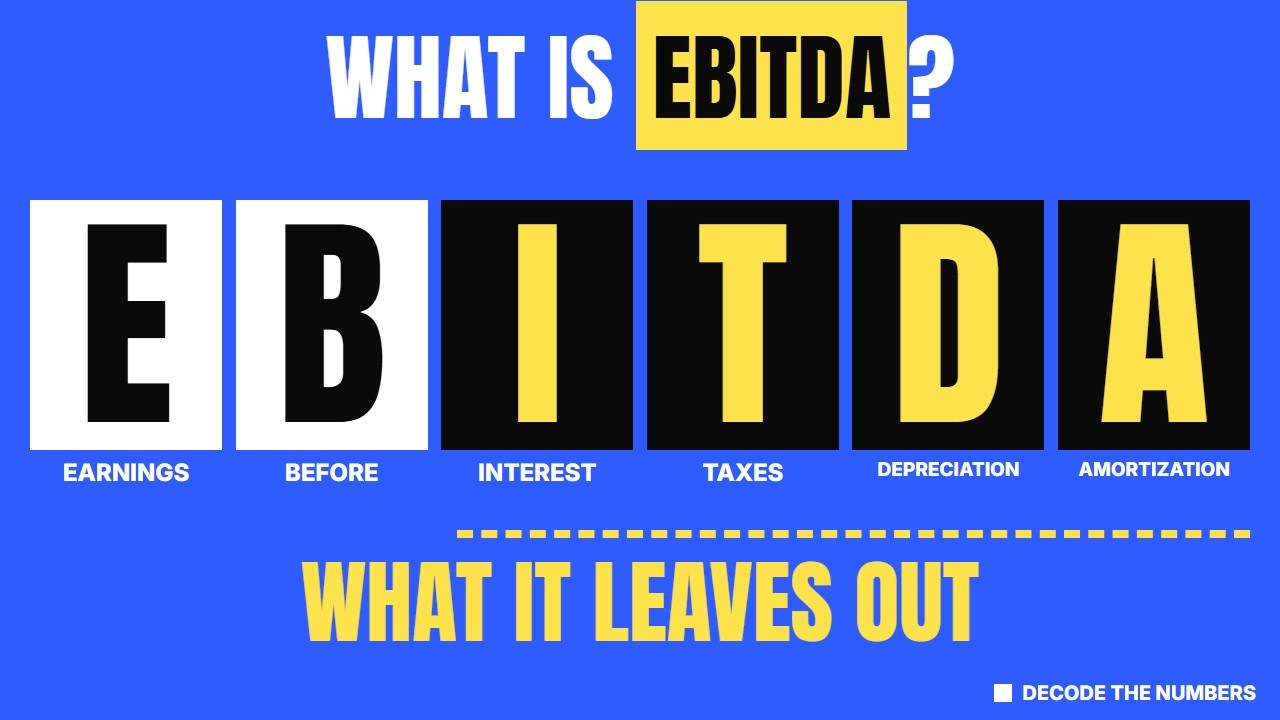
The difference between SDE and EBITDA is how they treat the owner. Both start from the same profit and add back interest, taxes, depreciation and amortization, the four items behind what EBITDA means. SDE then also adds back everything the owner takes out of the business. EBITDA keeps the cost of someone running it.
| SDE | EBITDA (normalized for a sale) | |
|---|---|---|
| Full name | Seller's discretionary earnings | Earnings before interest, taxes, depreciation and amortization |
| Owner's salary and benefits | Added back in full (one owner) | Replaced with a market-rate manager salary |
| Owner's personal expenses in the business | Added back | Added back |
| One-time expenses | Added back | Added back |
| Interest, taxes, D&A | Added back | Added back |
| Answers the question | What can one full-time owner-operator take home before debt service and CapEx? | What does the business earn if a hired manager runs it? |
| Typical buyer | An individual who will run the business | Private equity, strategic buyers, lenders |
| Typical size | Small, owner-operated ("main street") firms | Larger firms with a management team |
| Multiples | Lower numbers, on a bigger base | Higher numbers, on a smaller base |
What is seller's discretionary earnings (SDE)?
Seller's discretionary earnings is the total financial benefit one full-time owner gets from a business in a year: profit before interest, taxes, depreciation and amortization, plus the owner's own pay and perks, plus one-time and personal costs. BizBuySell, a large US business-for-sale marketplace, puts it simply: SDE equals EBITDA plus the normalized salary of one working owner.
The idea is that a buyer who runs the business will pay themselves from the same pool. SDE tells them how large that pool is before they service any acquisition loan or replace equipment.
How SDE and EBITDA treat owner compensation
SDE adds back one owner's total compensation, while EBITDA in a sale replaces it with the cost of a hired manager at market rates. The gap between the two is often larger than people expect.
- In SDE, the owner's salary, payroll taxes on it, health insurance, retirement contributions and similar benefits are all added back. Only one owner counts.
- In normalized EBITDA, the owner's actual pay is removed and a market-rate salary and benefits for a general manager are put in its place. If the owner was overpaid, EBITDA rises. If the owner was paid nothing, EBITDA falls.
Normalized EBITDA is a form of adjusted EBITDA with documented add-backs. The manager salary has to be realistic for the role and the local market. Buyers will check it.
Worked example: net income to EBITDA to SDE
Take a hypothetical residential heating and cooling service company with $3,000,000 of revenue, one owner who works in the business full time and no other family members on payroll. It is taxed as a pass-through entity, so no income tax is paid at the company level.

| Income statement (hypothetical) | Amount |
|---|---|
| Revenue | $3,000,000 |
| Materials and technician labor | −$1,800,000 |
| Gross profit | $1,200,000 |
| Owner's salary | −$120,000 |
| Owner's health insurance | −$18,000 |
| Owner's personal vehicle | −$9,000 |
| Owner's personal travel (documented) | −$6,000 |
| Legal fees for a one-time lease dispute | −$12,000 |
| Rent, office staff, marketing, insurance, other | −$650,000 |
| Depreciation and amortization | −$45,000 |
| Interest on equipment loans | −$25,000 |
| Net income | $315,000 |
Now walk from net income to the three earnings figures a buyer will see:
| Bridge (hypothetical) | Amount |
|---|---|
| Net income | $315,000 |
| + Interest | $25,000 |
| + Income tax | $0 |
| + Depreciation and amortization | $45,000 |
| EBITDA (as reported) | $385,000 |
| + Personal vehicle and travel | $15,000 |
| + One-time legal fees | $12,000 |
| + Owner's salary and health insurance | $138,000 |
| − Market-rate general manager (salary, payroll taxes, benefits) | −$115,000 |
| Adjusted (normalized) EBITDA | $435,000 |
| + Add the manager cost back (the owner fills the role) | $115,000 |
| SDE | $550,000 |
The short way gives the same result: add the owner's pay, the personal costs and the one-time costs from the table straight to reported EBITDA.
The gap between SDE and adjusted EBITDA is exactly the cost of the manager the owner replaces.
When buyers and brokers use SDE or EBITDA
SDE is the standard for small businesses where the buyer will also be the operator. EBITDA takes over once the business has a management team and attracts buyers who will not run it themselves.
- SDE fits shops, restaurants, service trades, small agencies and online stores bought by an individual. BizBuySell describes SDE as the measure for "main-street-sized businesses."
- EBITDA fits companies with a general manager or leadership team, buyers such as private equity firms or competitors, and deals financed by banks that test debt-to-EBITDA ratios. BizBuySell says businesses with EBITDA greater than $1 million use EBITDA as the cash flow measure.
Treat the $1 million figure as a rough marker, not a rule. A $700,000-EBITDA firm with a strong manager may be valued on EBITDA, and a larger one that depends entirely on its owner may still be sold on SDE.
SDE multiples vs. EBITDA multiples
SDE multiples are lower numbers than EBITDA multiples for the same business because SDE is the bigger denominator. A price is a price; dividing it by a larger earnings figure gives a smaller multiple.
Take the hypothetical heating and cooling company and assume it sells for $1,500,000. The same price gives two very different multiples:
| Sale at $1,500,000 (hypothetical) | Earnings | Price ÷ earnings |
|---|---|---|
| SDE | $550,000 | 2.73x |
| Adjusted EBITDA | $435,000 | 3.45x |
Both multiples describe the same deal. Applying an EBITDA multiple to SDE (or the reverse) is one of the fastest ways to misprice a business, a mistake BizBuySell specifically warns against.
For real-world reference, BizBuySell's Q3 2026 Insight Report gives average sale-price-to-cash-flow multiples of 2.30x for businesses that sold for under $1 million and 3.73x for those that sold for more than $1 million. The median business sold for $350,000.
Source: BizBuySell Insight Report, Q3 2026. BizBuySell notes that the "cash flow" in business-for-sale listings is usually normalized SDE, sometimes normalized EBITDA, so treat these as mostly SDE multiples.
Common SDE mistakes
The most common SDE mistakes inflate the number with add-backs a buyer will reject.
- Adding back more than one owner's pay. SDE counts one working owner. If two partners both work full time, the buyer must pay someone to do the second job, so the second salary stays as a cost (at market rate).
- Personal expenses without documents. Cars, phones, travel and meals are fair add-backs only if receipts and records show they were personal and will stop. "Everyone does it" is not evidence.
- A relative's salary is an add-back only if the family member on payroll does no real work. If they do, the buyer needs a replacement.
- Recurring costs called one-time. A website rebuild every two years or annual equipment repairs are part of running the business.
- Forgetting capital spending. SDE is before equipment replacement. A business with old trucks or tools will need capital expenditures soon, and that cash comes out of the same pool.
- Ignoring the rent on the owner's building. Many owners hold the building in a separate company and charge the business rent. If that rent is above or below market, adjust it to market rate, because a new owner will pay market rent.
- Finally, watch for mixed multiples: an EBITDA multiple applied to SDE overstates value, as the example above shows.
FAQ
Is SDE the same as EBITDA?
No. SDE is EBITDA plus one owner's full salary and benefits. For the same business, SDE is higher than normalized EBITDA by the cost of a replacement manager.
Is SDE the same as cash flow?
Not exactly. Business-for-sale listings often label SDE as "cash flow", but SDE ignores capital spending, debt payments and changes in working capital.
Is SDE higher than EBITDA?
Yes, compared with normalized EBITDA, because SDE adds back the owner's pay while normalized EBITDA deducts a market-rate manager salary. If the owner took no salary, reported EBITDA and SDE can be close or equal.
Does SDE include the owner's salary?
SDE adds the owner's salary back, so the figure includes it as part of the earnings available to the owner. Only one working owner's pay is added back.
What is a good SDE multiple?
It depends on size, industry, growth and how much the business relies on its owner. BizBuySell's Q3 2026 data show average cash flow multiples of 2.30x for businesses sold under $1 million and 3.73x above that.
Can SDE be negative?
Yes, if the business loses more than the owner takes out in pay and perks. In that case the business does not support a full-time owner.
How do you calculate SDE?
Start with net income, add back interest, taxes, depreciation and amortization to get EBITDA, then add one working owner's total compensation plus documented personal and one-time expenses.
Related