What is CapEx? Capital expenditures meaning, formula and examples

Prefer to watch? The 5-minute video covers the same example.
CapEx, short for capital expenditure, is money a company spends to buy, build or improve long-term assets such as buildings, vehicles, machines and computers. Because the asset is used for years, the cost is not deducted all at once. It is recorded as an asset and spread over its useful life as depreciation.
What does CapEx mean?
CapEx stands for capital expenditure, also called capital spending. It covers any money spent on an asset that will keep working for the business for more than a year. You will see it written as CapEx, capex or CAPEX. They all mean the same.
The opposite is an operating expense: a cost that is used up in the normal course of running the business, such as salaries, rent or a repair.
CapEx examples
These usually count as capital expenditures:
- Buying land (which is capitalized but not depreciated) or a building, or constructing a new warehouse, shop or factory
- Vehicles: delivery vans, trucks, company cars, aircraft
- Machines and production equipment
- Computers, servers and network equipment
- Software bought or developed for long-term use
- Upgrades that extend an asset's life or make it more capable, such as a new roof or a new engine
These usually do not: routine repairs and maintenance, office supplies, rent, salaries, and subscriptions such as cloud services.
CapEx vs. OpEx: what is the difference?
Take a hypothetical delivery company. A van needs new tires for $800. That is a repair, an operating expense (OpEx), and it is deducted from profit straight away. If the van is worn out and the company buys a new one for $50,000, that is CapEx. The new van will be used for about five years, so its cost is spread over five years.
| OpEx | CapEx | |
|---|---|---|
| What it buys | Day-to-day running of the business | Assets used for more than a year |
| Example | New tires: $800 | New van: $50,000 |
| On the income statement | Full cost in the same year | Spread over the useful life (depreciation) |
| On the balance sheet | Nothing | Recorded as an asset |
| On the cash flow statement | Operating activities | Investing activities |
Some costs can go either way depending on how a company buys them. Servers bought for your own data center are CapEx. Renting the same computing power from a cloud provider is OpEx.
More: CapEx vs. OpEx with 20 grey-area examples.
Is CapEx an expense or an asset?
CapEx is recorded as an asset. On the balance sheet it appears under property, plant and equipment (PP&E), or under intangible assets for software and similar items. It only becomes an expense gradually, through depreciation or amortization, as the asset is used up.
CapEx and depreciation
Imagine the delivery company counted the whole $50,000 van as a cost in the year it bought it. If it normally earns $200,000 a year, profit would fall to $150,000 in year one and jump back to $200,000 in the next four years, even though the van is being used every year. Managers could also move profit between years just by choosing when to buy.
Accounting rules avoid this by charging each year with its share of the cost. That share is depreciation.
Spread this way, the van lowers profit by the same amount every year instead of all at once:
| Profit | Whole cost in year 1 | With depreciation |
|---|---|---|
| Year 1 | $150,000 | $190,000 |
| Year 2 | $200,000 | $190,000 |
| Year 3 | $200,000 | $190,000 |
| Year 4 | $200,000 | $190,000 |
| Year 5 | $200,000 | $190,000 |
| Five-year total | $950,000 | $950,000 |
This rule goes back to the railways. In the 1800s, British railways kept one account for building the line and one for running the trains, and some hid running costs in the building account to make profits look higher. In 1867 a committee investigating the Caledonian Railway recommended charging each year with the wear and tear it took to earn that year's income. In 1907 US regulators made depreciation of railroad equipment mandatory.
Where CapEx shows up in the financial statements
- Cash flow statement: the full $50,000 leaves on the day the van is bought, under investing activities.
- Balance sheet: the van is recorded as an asset worth $50,000, and its value falls by $10,000 each year.
- Income statement: $10,000 of depreciation is charged as a cost each year.
This is why a company can report a healthy profit in the same year that its bank account drops sharply. Profit is spread over five years. The cash goes out at once.
CapEx formula: how to calculate CapEx
The easiest way is to read it from the cash flow statement. Look in the investing section for a line called purchases of property, plant and equipment, capital expenditures or something similar. If a company does not show it, you can calculate it from two balance sheets:
Use net PP&E, the value after accumulated depreciation has been subtracted. That is the figure most balance sheets show. If you use gross PP&E, which has not been reduced by depreciation, do not add depreciation back, or you will count it twice.
Example (hypothetical): net PP&E was $200,000 at the start of the year and $240,000 at the end, and depreciation for the year was $10,000.
| CapEx from the balance sheet (hypothetical) | Amount |
|---|---|
| Net PP&E, end of year | $240,000 |
| − Net PP&E, start of year | −$200,000 |
| + Depreciation for the year | +$10,000 |
| = CapEx | $50,000 |
Depreciation is added back because it reduced the value of the assets without any cash being spent. If the company sold assets during the year, add their book value back too.
Maintenance CapEx vs. growth CapEx
Maintenance CapEx replaces what wears out, like the new van that replaces an old one. The business cannot avoid it if it wants to keep running at the same level.
Growth CapEx adds capacity or something new, like a bigger warehouse that lets the company take on more customers. It is a bet on future sales.
Companies rarely split the two in their reports. A common rough estimate is to treat depreciation as maintenance CapEx and anything above it as growth.
CapEx vs. depreciation: is a company spending enough?
Comparing CapEx with depreciation shows whether a company is replacing its assets as fast as they wear out. A ratio below 1 for several years in a row means the equipment is getting older. Profits can look good for a while, but a large replacement bill is coming. A ratio well above 1 means the company is expanding.
| Industry (US) | CapEx | CapEx ÷ depreciation |
|---|---|---|
| Telecom services | $48.0B | 1.05× |
| Semiconductors | $53.6B | 1.27× |
| Trucking | $10.9B | 1.50× |
| Restaurants | $11.2B | 1.64× |
| Air transport | $20.3B | 1.76× |
| Software | $113.1B | 2.45× |
| Utilities | $57.1B | 3.15× |
| All non-financial companies | $1,446.2B | 1.45× |
Calculated from Aswath Damodaran, NYU Stern, capital expenditures by sector (US), January 2026. Latest twelve months. Depreciation for all non-financial companies was $999.1B.
Telecom companies spend roughly what they depreciate: they are maintaining networks that already exist. Utilities spend more than three times their depreciation as they build new power capacity, and software companies spend nearly two and a half times as much, mostly on data centers.
CapEx also connects to free cash flow, the cash left after a business has paid to keep itself running:
More: free cash flow formulas, examples and a calculator.
Which companies spend the most on CapEx?
In 2026 the largest capital spenders are the big US technology companies building data centers for artificial intelligence. Their latest guidance for calendar 2026:
| Company | 2026 CapEx guidance |
|---|---|
| Amazon | about $220 billion |
| Alphabet (Google) | $195–205 billion |
| Microsoft | about $170 billion |
| Meta | $135–145 billion |
| Big four total | $720–740 billion |
Company guidance after the Q3 2026 earnings reports (late October 2026). Companies measure CapEx slightly differently, for example in how they count finance leases. Sources and quarterly figures: AI capex tracker.
That total is roughly double what the four spent in 2025. For investors the question is the one CapEx always raises: will the assets earn more than they cost before they wear out?
More: the AI capex tracker for Amazon, Alphabet, Microsoft and Meta.
CapEx for small businesses: capitalize or expense?
Small businesses face the same choice on a smaller scale. In the US, the IRS de minimis safe harbor lets businesses without audited financial statements deduct items costing up to $2,500 per item or invoice right away instead of capitalizing them. The limit is $5,000 for businesses with audited financial statements. Anything above the limit is capitalized and depreciated. You have to choose the safe harbor each year with a statement attached to the tax return. Rules differ by country, so check with your accountant.
Why CapEx matters
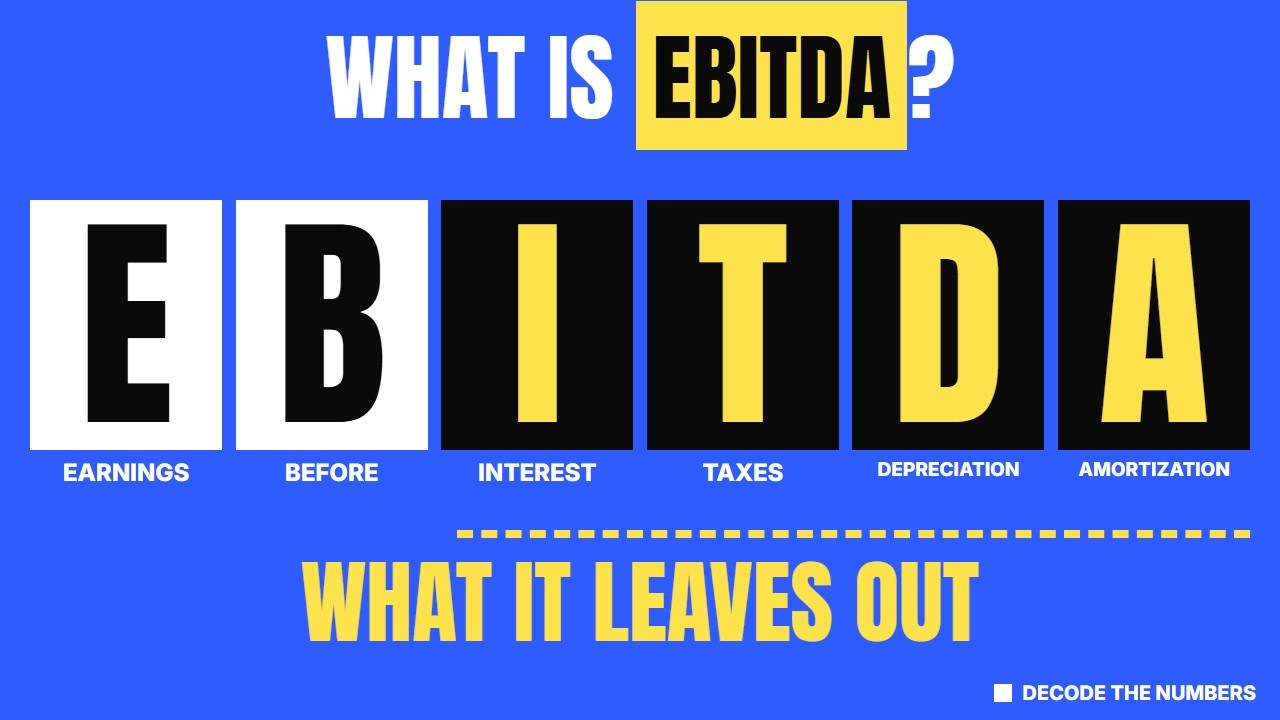
Two delivery companies can report the same profit this year. One has new vans that will run for years. The other has old vans that all need replacing soon. Profit only counts a slice of each van's cost per year, so the income statement does not show the difference. EBITDA leaves depreciation out entirely and shows it even less. Warren Buffett's question from his 2000 shareholder letter sums it up: does management think the tooth fairy pays for capital expenditures? When a business looks profitable, check how much CapEx it takes to keep it running.
CapEx FAQ
What is CapEx in simple terms?
CapEx is money a company spends on things it will use for more than a year, such as buildings, vehicles, machines and computers. The cost is spread over the years the asset is used instead of being counted all at once.
Is CapEx an expense or an asset?
CapEx is recorded as an asset on the balance sheet. It only becomes an expense gradually, through depreciation, over the asset's useful life.
What is the difference between CapEx and OpEx?
OpEx (operating expenses) are the everyday costs of running a business, such as rent, salaries, supplies and repairs. They are deducted in full in the year they occur. CapEx buys long-term assets and is spread out over several years.
What is the difference between CapEx and depreciation?
CapEx is the cash spent on an asset, usually up front. Depreciation is the part of that cost charged to each year's profit. A $50,000 van is $50,000 of CapEx on day one and $10,000 of depreciation a year for five years.
How do you calculate CapEx?
Use the line 'purchases of property, plant and equipment' in the investing section of the cash flow statement. Or calculate it from the balance sheet: take net PP&E at the end of the year, subtract net PP&E at the start and add depreciation for the year.
Is CapEx included in EBITDA?
No. EBITDA leaves out depreciation, which is how CapEx reaches the income statement, so the cost of equipment never shows up in EBITDA.
Who has the highest CapEx?
In 2026 the largest spenders are the big US technology companies building data centers for AI. Their guidance for 2026 is about $220 billion for Amazon, $195 to $205 billion for Alphabet, about $170 billion for Microsoft and $135 to $145 billion for Meta.
Should it be written CapEx, capex or CAPEX?
All three are used and mean the same thing. CapEx is the most common in financial writing.
Is high CapEx bad?
Not necessarily. Maintenance CapEx keeps the business running and cannot be avoided. Growth CapEx is an investment in future sales. What matters is whether the spending earns a return.
Video chapters
- 0:00 What CapEx is (and Buffett's tooth fairy)
- 0:20 CapEx = capital expenditure
- 0:31 What counts as CapEx? Repair vs. new van
- 0:53 Why the cost is spread out
- 1:28 Where the rule comes from: 1800s railways
- 2:07 Depreciation
- 2:34 Where the $50,000 goes: the three reports
- 3:09 The catch: profit is spread out, cash isn't
- 3:16 Same profit, very different future
- 3:53 Is high CapEx bad news?
- 4:10 Is it spending enough? CapEx vs. depreciation
- 4:26 The one question to ask
Related
Sources
- Aswath Damodaran, NYU Stern: Capital expenditures by sector (US), January 2026
- IRS Notice 2015-82: de minimis safe harbor limit raised to $2,500
- Warren Buffett, Berkshire Hathaway shareholder letter, 2000
- Caledonian Railway committee of investigation report, 1867; US Interstate Commerce Commission accounting rules, 1907